


Introduction
Cannabis is more complex than just THC. THCA and Delta 9 THC are two compounds that often cause confusion, but understanding their differences is key to making informed choices. Whether you’re exploring THCA-rich hemp products or looking into the psychoactive properties of hemp and marijuana plants, knowing how these compounds work will help you make an informed choice.
Why Understanding THCA vs. Delta 9 Matters
THCA exists in raw cannabis and does not produce a high. Delta 9 THC, on the other hand, is the psychoactive compound responsible for cannabis’s well-known effects. The transformation from THCA to Delta 9 happens through decarboxylation, a process triggered by heat. This distinction plays a role in everything from legal classifications to product choices.
Laws differ on THCA and Delta 9 THC due to their psychoactive properties. THCA, in its raw state, is not considered a controlled substance, but its ability to convert into Delta 9 raises legal considerations. Understanding these differences ensures you know what to expect when choosing between THCA-rich hemp products and those containing Delta 9 THC.
Key Takeaways
- THCA is non-psychoactive and found in raw cannabis, while Delta 9 THC produces intoxicating effects.
- Heating THCA through decarboxylation converts it into Delta 9 THC, changing its properties.
- Legal status varies, as THCA is not classified the same way as Delta 9 but can convert into it.
- Both compounds are found in hemp and marijuana plants, but their effects and classifications differ.
What is THCA or Tetrahydrocannabinolic Acid?

Tetrahydrocannabinolic acid (THCA) is a naturally occurring compound found in raw cannabis. THCA vs Delta 9 THC is a common comparison because unlike Delta 9 THC, it does not have psychoactive properties in its raw form. THCA is the precursor to THC, meaning it only becomes intoxicating when exposed to heat through smoking, vaping, or cooking.
Chemical Structure & Properties
THCA and Delta 9 THC share a similar structure, but THCA has an extra carboxyl group. This slight difference prevents THCA from binding to receptors in the brain that produce a high. When heated, this extra group is removed, converting THCA into Delta 9 THC. This process, called decarboxylation, changes the compound’s effects.

How THCA is Found in Raw Cannabis
THCA is present in fresh cannabis plants before they are dried, cured, or heated. In its raw form, it is not classified under the Controlled Substances Act the same way as Delta 9 THC. However, because THCA can be converted into Delta 9, its legal status can depend on how it is processed and used.
Consumption Methods for THCA
People consume tetrahydrocannabinolic acid in various ways, including:
- Raw cannabis: THCA remains unchanged in fresh cannabis leaves and flowers.
- Juicing or blending: Some use raw cannabis in juices or smoothies to consume THCA without converting it.
- THCA-rich products: Extracts, tinctures, and concentrates provide THCA in a raw form, allowing for non-psychoactive use.
- Heating methods: Smoking, vaping, or baking cannabis transforms THCA into Delta 9 THC, activating its psychoactive effects.
The way THCA is consumed determines whether it remains non-psychoactive or converts into Delta 9 THC.
What is Delta 9 THC?

Delta 9 THC is the primary psychoactive compound in cannabis products, responsible for the altered sensory perception commonly associated with cannabis use. It interacts with the body’s endocannabinoid system, producing the psychoactive effects commonly linked to THC. Unlike THCA, which exists in raw cannabis, Delta 9 THC requires activation through heat to become psychoactive.
Chemical Structure & Psychoactive Properties
Delta 9 THC has a specific molecular structure that allows it to bind with CB1 receptors in the brain. This interaction leads to psychoactive effects, including changes in mood, perception, and cognition. The intensity of these effects depends on factors like potency, consumption method, and individual tolerance.

How Delta 9 THC is Formed (Decarboxylation Process)
THCA is the natural precursor to Delta 9 THC. When cannabis products are exposed to heat through smoking, vaping, or cooking, a process called decarboxylation occurs. This removes a carboxyl group from THCA, converting it into Delta 9 THC and activating its psychoactive properties. Without this process, THCA remains non-psychoactive.
Common Consumption Methods
Delta 9 THC can be consumed in multiple ways, each affecting onset time and duration:
- Smoking & Vaping – The most common methods, providing fast-acting psychoactive effects through inhalation.
- Edibles & Tinctures – These require digestion, delaying onset but producing longer-lasting effects.
- Topicals & Hemp Derivatives – Some hemp derivatives contain Delta 9 THC in forms that may absorb through the skin, though effects vary.
THCA vs. Delta 9 THC: Key Differences
Both THCA and Delta 9 THC are found in live cannabis, but their effects and legal classifications are not the same. While they share a connection, their impact on sensory perception, legal status, and consumer preferences sets them apart.
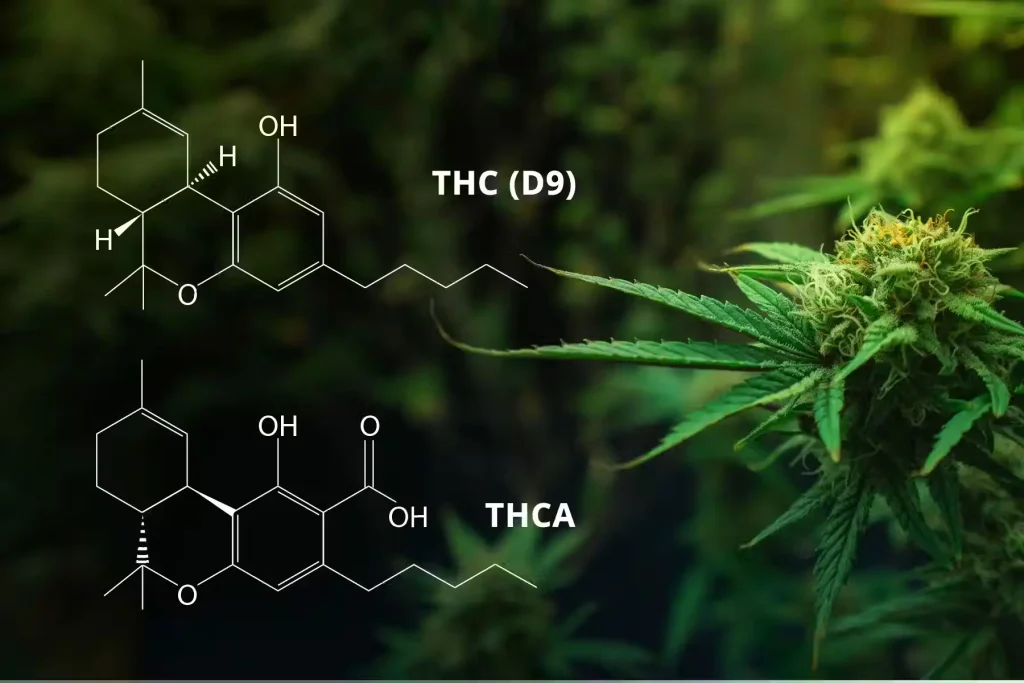
1. Psychoactive Effects Comparison
THCA does not produce the same psychoactive effects as Delta 9 THC. In its raw form, THCA does not bind directly to receptors that influence sensory perception. However, when exposed to heat, it converts into Delta 9 THC, which is responsible for cannabis’s intoxicating effects. Delta 9 interacts with receptors in the brain, altering mood, cognition, and physical sensations.
2. Interaction with the Endocannabinoid System
THCA and Delta 9 THC interact with the body differently. THCA does not directly activate CB1 receptors, meaning it does not create an immediate high. In contrast, Delta 9 binds strongly to CB1 receptors, producing noticeable effects. This fundamental difference influences how each compound is categorized and used.
3. Consumer Use Cases & Preferences
Many consumers seek out THCA products for their unique characteristics, while others prefer Delta 9 THC for its psychoactive effects. Some choose raw or minimally processed THCA products, while others look for products that contain activated Delta 9. Legal status also plays a role, as some regions regulate these compounds differently.
Legal Status & Regulations
Cannabis laws are constantly evolving, and the differences between THCA and Delta 9 THC add another layer of complexity. While THCA is naturally found in fresh cannabis leaves, its legal status depends on whether it remains in its raw form or converts into Delta 9. Understanding local laws and federal regulations is essential when exploring other hemp derivatives in the cannabis market.
Legal Considerations for THCA
THCA itself is not classified as a controlled substance at the federal level. Since it does not have psychoactive properties in its raw form, some regulations treat it differently than Delta 9 THC. However, the concern arises when THCA-rich hemp products are heated, converting THCA into Delta 9. This potential transformation has led some states to regulate THCA similarly to Delta 9 THC.
Federal & State Laws on Delta 9 THC
Delta 9 THC is federally restricted and classified as a controlled substance under the Controlled Substances Act when present in concentrations above 0.3% on a dry-weight basis. However, local laws vary widely. Some states allow Delta 9 THC for adult use, while others enforce stricter regulations. Always check your state’s stance before purchasing or possessing products containing Delta 9.
Understanding the 2018 Farm Bill & Compliance
The 2018 Farm Bill legalized hemp and its derivatives, provided they contain no more than 0.3% Delta 9 THC. This opened the door for the cannabis market to expand with other hemp derivatives, including THCA. However, compliance remains key. Even if a product is derived from hemp, exceeding the THC limit could lead to legal consequences.
Safety & Side Effects

Understanding the effects of THCA and Delta 9 THC is essential when considering medical and recreational use. While Delta 9 is known for its psychoactive properties, THCA is a non-psychoactive precursor that exists in raw and live cannabis. The way these compounds interact with the body varies, influencing everything from personal experiences to legal considerations.
Common Effects of THCA vs. Delta 9 THC
- THCA does not produce intoxication in its raw form, but when heated, it converts into Delta 9, which has strong psychoactive properties.
- Delta 9 THC affects perception, mood, and cognition, which is why it is regulated for medical and recreational use.
- Some people report experiencing dry mouth, dizziness, or temporary changes in perception with Delta 9. THCA, in its raw state, does not have these effects.
Tips for Responsible Consumption
- Know the source – Whether from growing cannabis plants or purchasing THCA-rich hemp products, ensure quality and compliance with regulations.
- Understand the conversion – Heating or aging non-psychoactive precursor THCA changes its properties, affecting its legal status and effects.
- Start with small amounts – If trying Delta 9 THC, be mindful of individual tolerance levels and potential effects..
User Experiences & Market Availability
Consumers approach THCA and Delta 9 THC with different expectations. While some prefer THCA-rich hemp products for their natural state, others seek the intoxicating effects of Delta 9 THC. The choice often depends on personal experience, legal considerations, and how each compound interacts with individual preferences.
For a seasoned cannabis enthusiast, the psychoactive nature of Delta 9 THC offers familiar euphoric effects. Others, especially those exploring cannabis compounds for the first time, may be more interested in THCA due to its unheated form and distinct properties. The chemical structure of THCA changes when exposed to heat, which is why product type matters when considering desired effects.
Popular Products Containing THCA & Delta 9 THC
Both compounds are widely available in different forms. THCA-rich hemp products come in options like raw flower, tinctures, and concentrates. Delta 9 THC, on the other hand, is commonly found in edibles, vapes, and infused beverages, designed to produce euphoric effects.
As the cannabis world expands, product innovation continues to evolve. Some consumers mix THCA and Delta 9 THC to create a balanced experience, while others prefer products tailored to a single compound. The variety of options allows users to explore different formats based on their desired effects.
Consumer Trends & Preferences
Market trends show increasing interest in THCA-rich hemp products, especially in states with strict Delta 9 regulations. Consumers looking for specific cannabis compounds often compare potency, formulation, and delivery methods to match their preferences. Meanwhile, Delta 9 THC remains popular among those seeking stronger intoxicating effects.
The demand for pain relief-related products has also influenced the market, driving innovation in formulations that combine different cannabis compounds. With more choices available, consumers can select products that align with their experiences and expectations.
Conclusion & Final Thoughts
Understanding the differences between THCA and Delta 9 THC gives you more control over your cannabis experience. Whether you’re looking for a non-psychoactive option or a psychoactive compound that produces typical intoxicating effects, knowing how these chemical compounds work is essential. When heat is applied, THCA molecules convert into Delta 9 THC, altering their effects and legal status.
While many explore these compounds for their potential health benefits and therapeutic potential, legal restrictions dictate how they can be marketed and used. Choosing the right product means considering how Delta 9 THC interacts with your needs and preferences while staying informed about its legal standing.
Making an Informed Choice
Not all cannabis products are the same. Some focus on THCA’s non-psychoactive properties, while others contain Delta 9 THC for its well-known effects. Understanding how these chemical compounds interact helps you make a choice that aligns with your goals.
Explore More with Urban Farmacy
At Urban Farmacy, we provide high-quality cannabis products that fit your lifestyle. Whether you’re looking for THCA-rich options or want to learn more about Delta 9 THC, our team is here to help. Explore our selection today and find the right product for you.
Urban Farmacy is a cannabis dispensary in NE Portland OR, founded in 2014.
Check out our cannabis blog for tons more articles like this one!


